
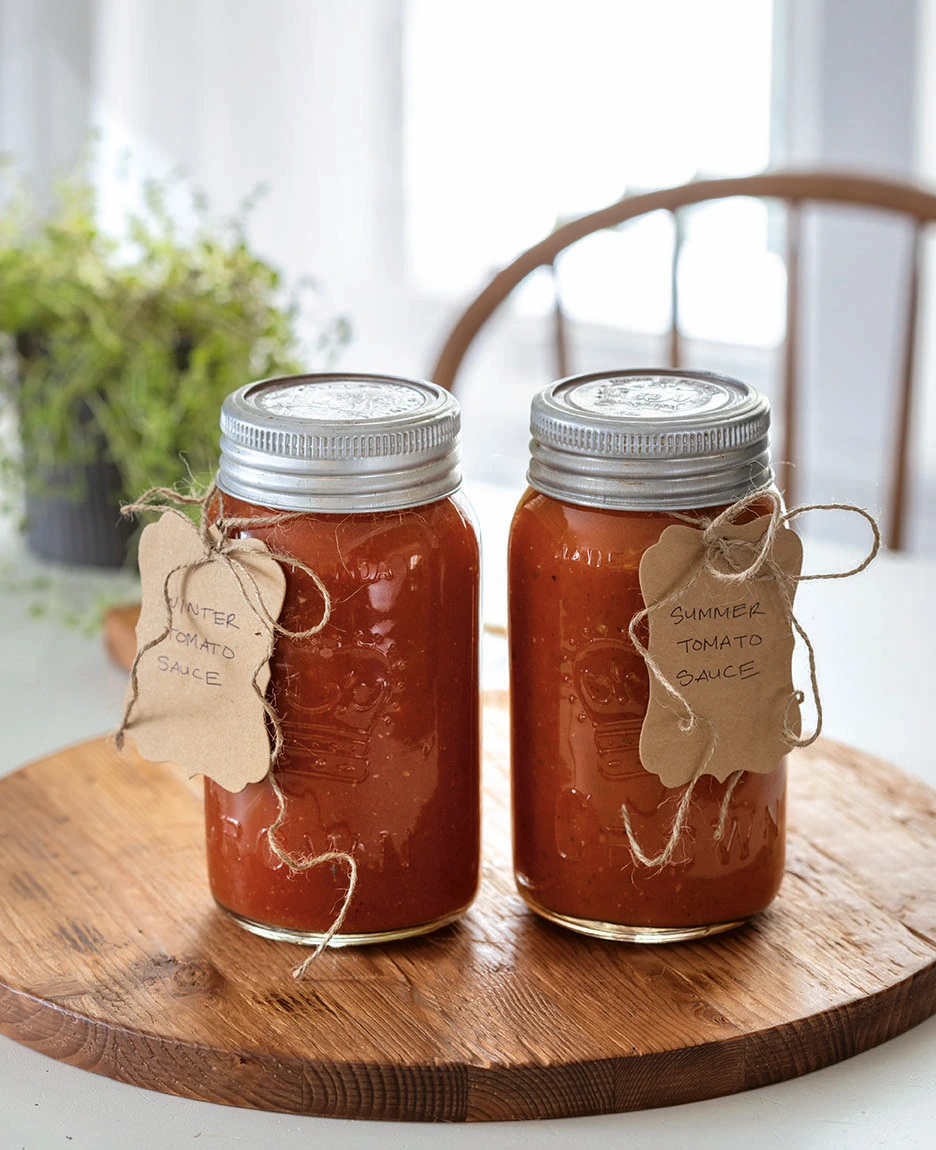
As we bring our lives back indoors, planning meals appropriate to the season can be easier when you have a few essential recipes in your repertoire. These include a good homemade chicken stock, an adaptable cheese sauce, and a tomato sauce that can be made with the last of summer’s fresh or tinned tomatoes. With these essentials, you have the base for delicious soups, stews, pastas and other cozy meals.
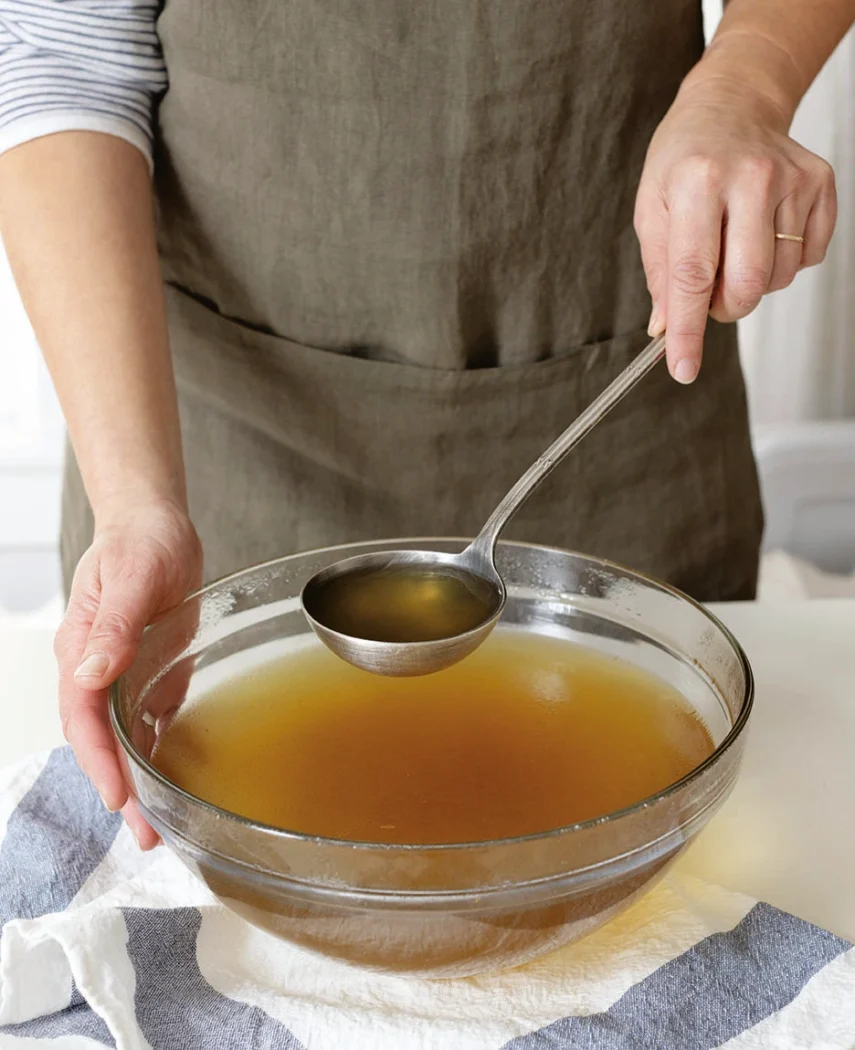
Grandma-Style Chicken Stock
The aroma of a slowly simmering chicken stock is so comforting, especially in cool weather. What sets this chicken stock recipe apart is the addition of parsley or celery root, if you can’t find parsley root. Common in central European soup and stock recipes, parsley root looks like a parsnip, and adds a subtle sweetness and aromatic depth to stock, which in turn really gives character to anything in which it is used.
Makes about 8 cups (2 L)

Prep time: Under 10 minutes
Cook time: 2½ hours
3¼ to 4 lb (1.5 to 1.8 kg) whole chicken, cut into pieces
2 large carrots
2 large cooking onions, unpeeled
2 parsley roots or ½ celery root
8 stems fresh thyme
4 bay leaves
6 black peppercorns
- Place the chicken in a large soup pot. Wash and trim the carrots and add to the pot. Trim the ends of the onions and peel away the outer layer of the papery skin, but leave the under layer of skin on—this adds a golden colour to the stock. Cut them in half and add to the pot. Peel the parsley (or celery) root, coarsely chop and add to the pot. Add the thyme stems, bay leaves and peppercorns. Fill the pot with cold water so that it comes just to the top of the chicken and vegetables.
- Bring the stock up to a simmer on medium heat (to ensure a clear broth, don’t rush this step). As the stock reaches a simmer, use a spoon to skim any fat or impurities from the surface. Reduce the heat to medium-low so that the stock bubbles very gently as it cooks, uncovered. Check the stock every half hour or so, skimming the surface and avoiding stirring it. Simmer for 2½ hours.
- Strain the stock into a large bowl or other pot. The cooked chicken meat can be pulled and used in a chicken salad or added back to the soup at the end, but most of its flavour and food value are now in the stock. Discard the cooked vegetables and chicken bones. Cool the stock to room temperature and store, covered, in a pitcher or bowl in the fridge until ready to use.
The stock will keep in an airtight container in the fridge for up to 4 days or in the freezer for up to 3 months.
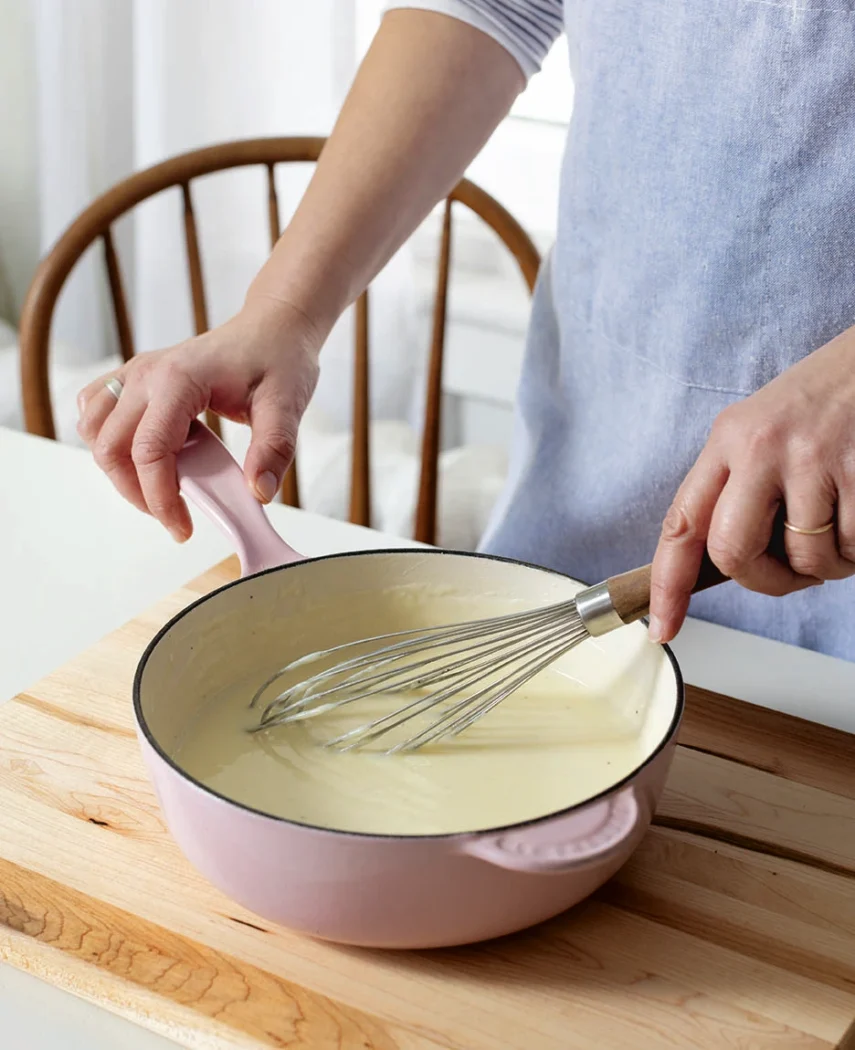
Easy Cheesy Sauce
A good basic cheese sauce is a handy recipe to have. A traditional cheese sauce is essentially a béchamel sauce — a basic white sauce — with added cheese (classically called a Mornay sauce in French cooking). A béchamel uses a butter and flour roux to thicken it, but this recipe is thickened with cornstarch:I find that this version stays silky even when baked, so it is perfect for topping vegetables or using in baked pasta.
It also makes a wonderful mac and cheese: toss the recipe below with 4 cups (1 L) cooked macaroni, sprinkle with a layer of toasted breadcrumbs and bake for 20 minutes at 400F (200C).
Makes about 3 cups (750 mL)
Prep time: Under 10 minutes
Cook time: 8 minutes
2 cups (500 mL) 2% milk
2 tbsp (16 g) cornstarch
1 tsp Dijon mustard
Pinch of ground nutmeg
1½ cups (165 g) coarsely grated meltable cheese
Salt and black pepper
- In a medium saucepot, whisk the milk, cornstarch, mustard and nutmeg, then bring to a full simmer over medium heat, whisking constantly until thickened and glossy. Reduce the heat to medium-low and whisk in the cheese in two stages, whisking until smooth each time. Season to taste and keep the sauce warm until ready to use.
Not sure which cheese to use? Here’s a guide to using and blending different cheeses in your favourite recipes:
- For a classic Cheddar sauce: Use 1½ cups (165 g) grated medium orange or white Cheddar (for mac and cheese) or old Cheddar (to top cooked cauliflower or broccoli).
- For an Italian cheese sauce: Use 1 cup (110 g) grated Asiago cheese and add ½ cup (50 g) finely grated Parmesan cheese.
- For a French cheese sauce: Use 1½ cups (165 g) grated Emmenthal or Jarlsberg cheese, or a mix of Emmenthal and Gruyere cheese for a stronger-tasting sauce.
- For a gooey American cheese sauce: Use 1 cup (110 g) grated Monterey Jack cheese and ½ cup (55 g) grated Cheddar cheese
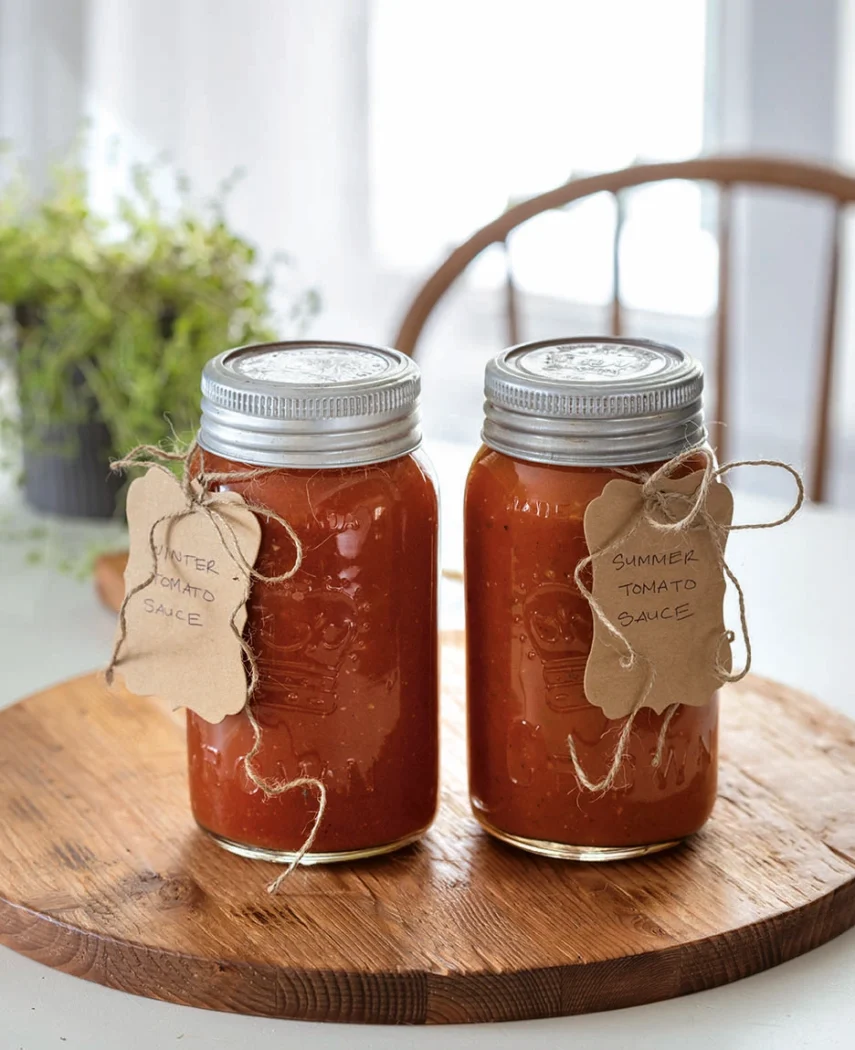
Nonna-Level Tomato Sauce
A nonna is an Italian grandmother, and I know a few in my neighbourhood whose tomato sauce is sacred to their family. These talented ladies make enough in late August to distribute to their children to last through the winter.
Tomato Sauce – Summer Edition
This freezer-friendly version of tomato sauce is made using in-season fresh tomatoes to really capture their peak flavour. San Marzano or Roma tomatoes are perfect to use because they are fleshy and have few seeds and not a lot of excess water, making for richly flavoured, smooth tomato sauce.
Makes about 8 cups (2 L)
Prep time: 40 minutes
Cook time: 75 minutes
6 lb (2.7 kg) fresh San Marzano or Roma tomatoes
Extra-virgin olive oil
2 large onions, diced
2 stalks celery, diced
3 large cloves garlic, sliced
1 tbsp (12 g) granulated sugar
2 tbsp (8 g) chopped fresh oregano
1 tbsp (4 g) chopped fresh thyme
2 tsp kosher or coarse pickling salt
½ tsp black pepper
Chili flakes or cayenne pepper (optional)
- Bring a large pasta pot of water up to a rolling boil. While waiting, score the skin at the bottom of each tomato with an X to make it easier to peel after blanching. Have a large bowl of ice water and a slotted spoon ready.
- Drop about twelve tomatoes into the boiling water and let these boil for 30 to 60 seconds—you will see the skins of the tomatoes start to split. Using the slotted spoon, quickly remove the tomatoes from the hot water and drop them into the ice water. Repeat with the remaining tomatoes in batches until all have been blanched and cooled. Drain the tomatoes well.
- Use a paring knife to peel away the skin from each tomato, saving the skins in a bowl. Cut the tomatoes in half and use a spoon or your fingers to pull out any seeds and watery pulp into the same bowl as the skins, removing the stem ends as well. Put the leftover skins and seeds into a sieve over a bowl for about an hour to drain. Save the liquid to add to the sauce and discard the skins and seeds.
- Place the now-empty pasta pot back on the stove and drizzle in some olive oil. Add the onions and celery and sauté over medium heat for about 5 minutes, until the onions become translucent. Add the tomatoes, the reserved tomato liquid from straining, garlic and sugar and give the tomatoes a good stir. Add the oregano, thyme, salt, pepper and chili (or cayenne, if using). Bring this up to a full simmer, covered, stirring occasionally. Once a simmer is reached, remove the lid and continue to cook until the tomatoes start to break down, about an hour. Remove the pot from the heat. Purée directly in the pot using an immersion blender or in a blender in batches.
- Cool the tomato sauce to room temperature, then pack into freezer-safe containers, label and freeze.
Note:The sauce will keep in its container in the freezer for up to a year. Thaw in the fridge before heating to use.
Are you connecting with your inner Nonna? If buying bushels of tomatoes, you can batch up this recipe and can the sauce to store in your pantry for up to a year instead of freezing it. Follow safe canning processes, including sterilizing the jars and boiling the filled jars in water for at least 35 minutes to ensure a vacuum-sealed lid.
Tomato Sauce – Winter Edition
This winter version of tomato sauce uses tinned tomatoes to make another freezer-friendly sauce that yields slightly more than the summer edition. I use a similar flavour base as in the summer recipe, and tinned tomatoes are packed and preserved at their peak ripeness, so really, you are not compromising the taste of the resulting sauce. Quality counts even with tinned tomatoes, so use whole San Marzano tomatoes.
Makes 10 cups (2.5 L)
Prep time: 15 minutes
Cook time: 75 minutes
1. Use three 28 oz (796 mL) tins of whole San Marzano tomatoes. Add them to the pot with the ingredients from step 4 and simmer for the same time to allow flavours to meld. Cool the tomato sauce to room temperature, then pack into freezer-safe containers, label and freeze.
The sauce will keep in a container in the freezer for up to a year. Thaw in the fridge before heating to use.