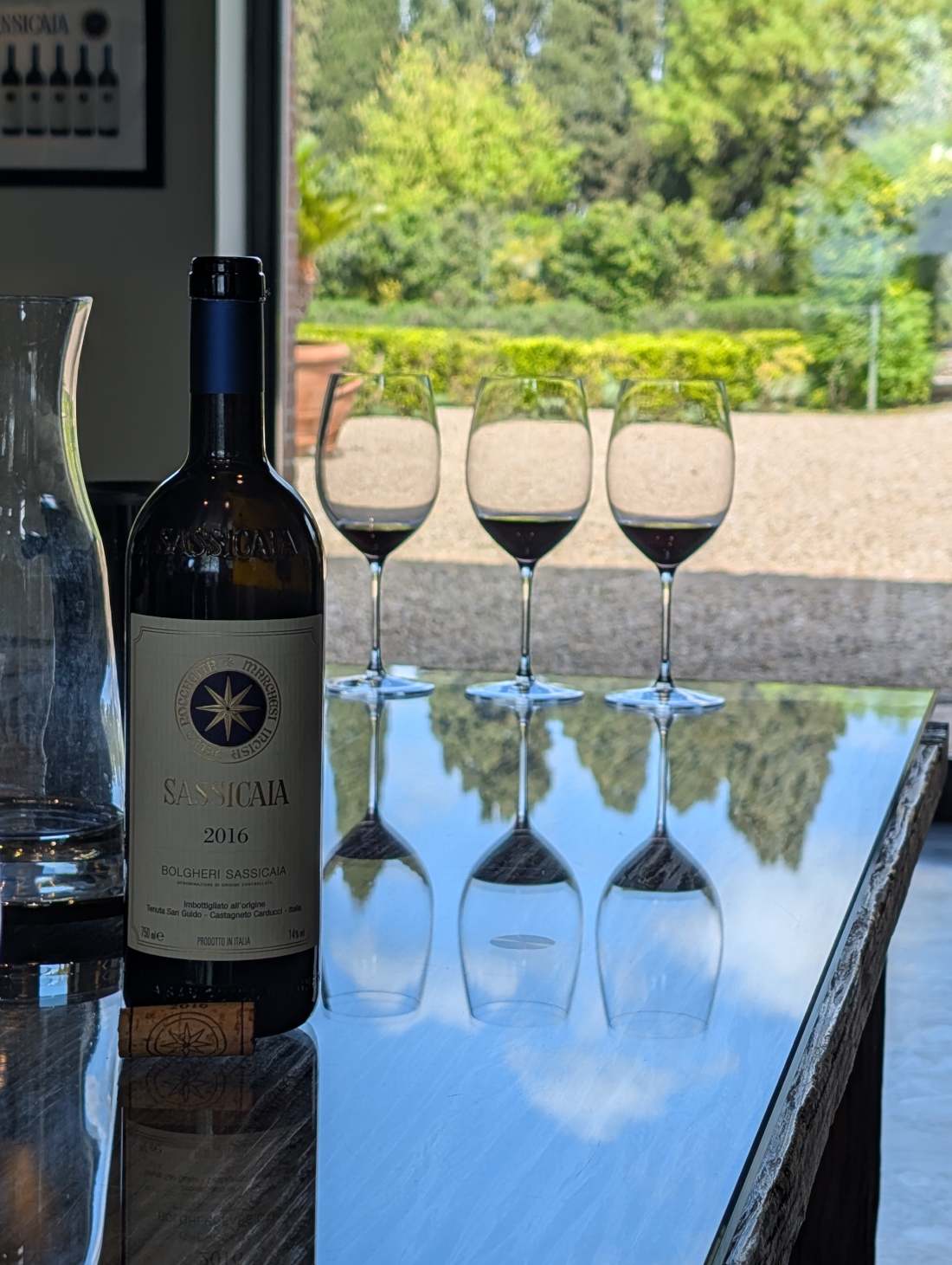
This past spring, while I was in Italy, I decided to rent a car and make a pilgrimage to Bolgheri for a five-day tasting adventure. Now, before we go any further, a word to the wise: you have to be careful when you tell people you are going to Bolgheri, because half the people I spoke with thought I said Bulgaria, which elicits its own follow-up questions, and a lot of confusion.
Bulgaria is an Eastern European country, and while they do make wine, I have never found any to get excited about — but maybe one day. On the other hand, maybe I’m totally wrong, but I’ll need someone to prove to me otherwise. That’s my own personal aside.
Then there is Bolgheri, a village in Castagneto Carducci in the province of Livorno in the region of Tuscany. It is home to some of Italy’s most famous IGT wines, (for those unfamiliar with that term, Indicazione Geografica Tipica), the birthplace of the Super Tuscan and is referred to as the Bordeaux of Italy because it is known for its Cabernet Sauvignon. It is the region built by Tenuta San Guido and their famous wine: a wine so famous it supplants the winery’s actual name – Sassicaia.
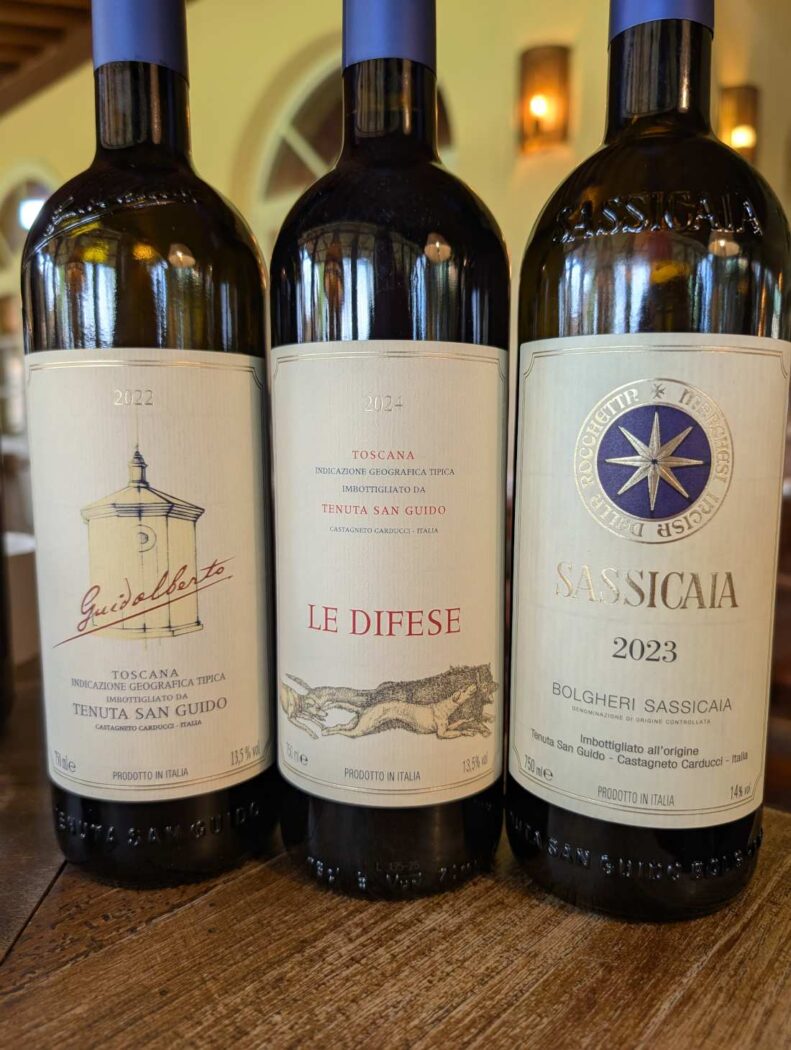
Sassicaia was a wine born from a vineyard planted at 360 meters above sea level during the latter part of World War II. The idea was to get away from usual Tuscan grapes such as Sangiovese, and try out Cabernet Sauvignon. At first, the wine was just made for the family. Then, in 1968, it became commercially available for the first time. What followed made history. The 1972 vintage made its way to a Decanter tasting of other great Cabernet Sauvignon wines of the world. There Sassicaia opened eyes and minds as it bested them all. People took notice of this small area of Tuscany: Bolgheri. In turn, this brought money and investment.

These days, when you talk to any winery of Bolgheri, they acknowledge that if it was not for Tenuta San Guido, they would not be there, and Bolgheri would not have the cache it does today. That’s a pretty bold statement to make. You’d think someone else at some time in the future would have made the discovery the owners of Tenuta San Guido did. Much like if Thomas Edison had not invented the light bulb, you have to believe that maybe someone else would have?
It’s a circular and disarming argument which all comes down to this: Bolgheri owes its roots to Tenuta San Guido, which is why they are one of the largest landholders in the region and have their own DOC, the Sassicaia DOC, which they packaged together with the entire Bolgheri area and call it Bolgheri e Bolgheri Sassicaia Consorzio di Tutela. It’s a refreshing vision, and sign of co-operation: a famous winery that could have easily sat on its laurels and plotted its own course instead believing in its region and neighbours. Together, everyone benefits; it’s the elevation of all boats theory.
This thinking, this philosophy, has brought other giants and icons to the area, such as Antinori and Gaja — two of the biggest names in Italian wine. I visited the Gaja operation while in Bolgheri, Ca’Marcanda, the House of the Endless Negotiation. So named because when Angelo Gaja decided he wanted to acquire land in Bolgheri, he looked at the icons of the area, and studied their soils and the maps. He noticed that those deliniated in yellow were the choice soils, and he, too, wanted a piece of that soil-type. He found an old farmer who was sitting on some of this land and began negotiations — for more than two years. Angelo’s wife told him to abandon it, on more than one occasion, and called it a ‘Marcanda’ (a word in a Piedmontese dialect.) So when it came time to finally name the winery, it was a no-brainer and their own little inside joke.
They were the first to tell me they owed their roots to Sassicaia. And every subsequent winery I visited told me the same thing.
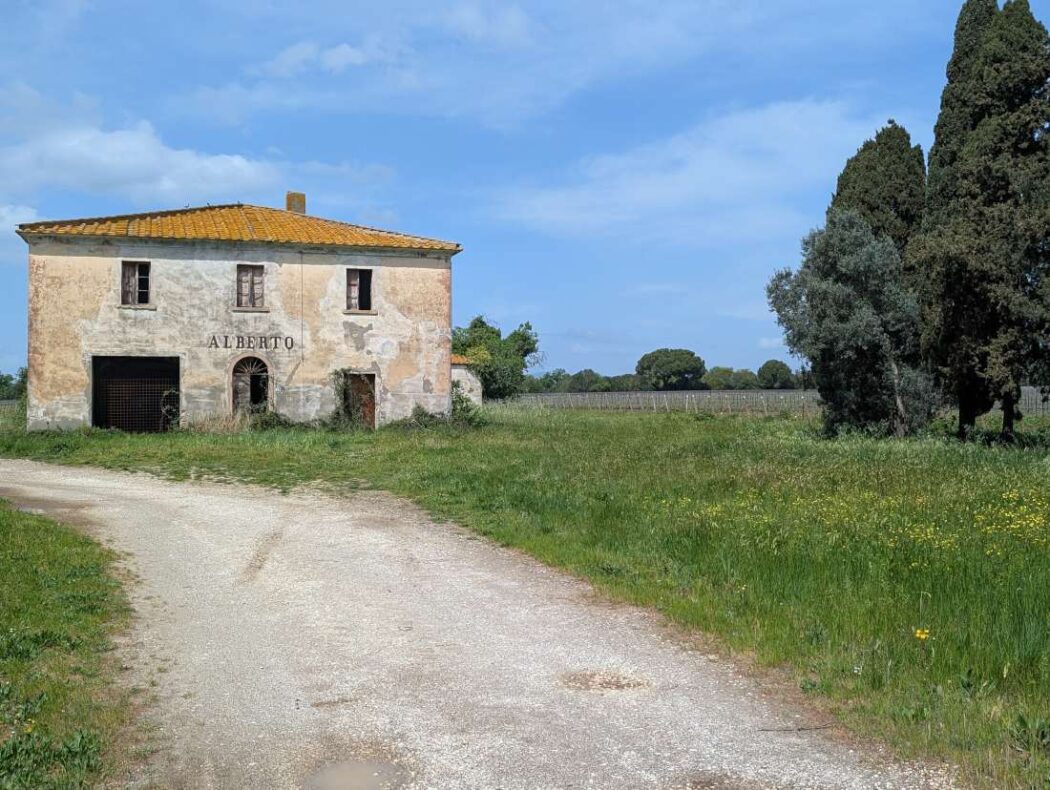
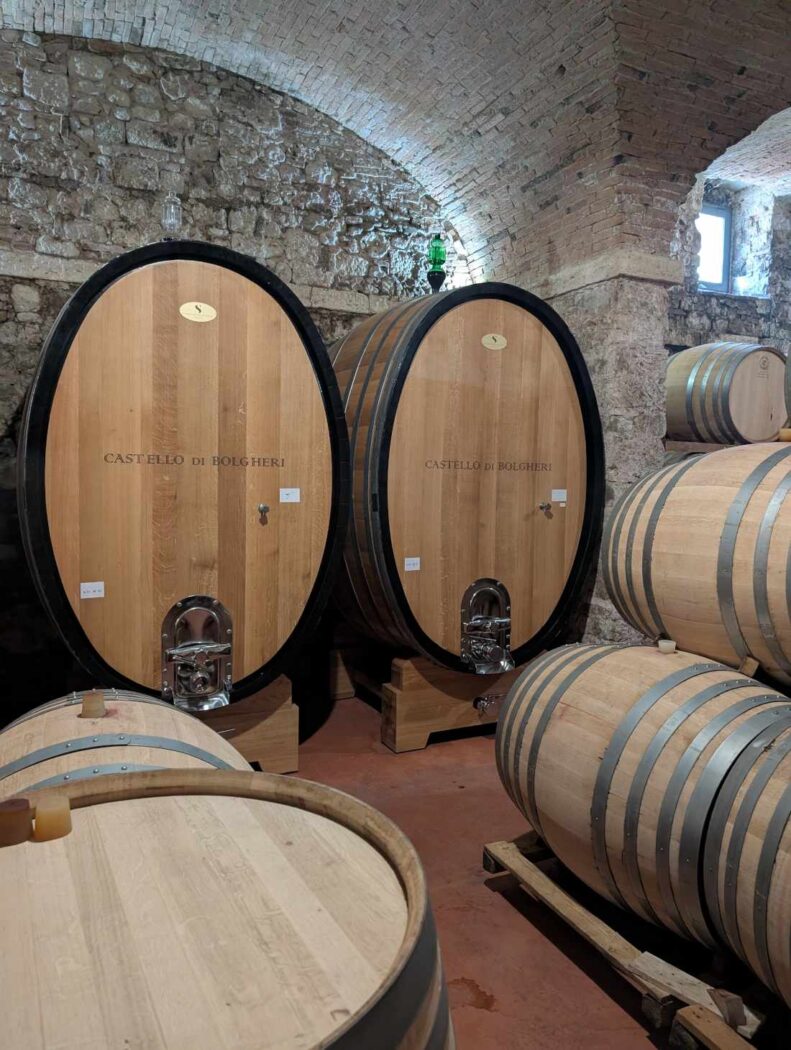
There is so much history in this land. So many great stories. Castello di Bolgheri is the only winery within the walls; they have the oldest cellar of the area, built in 1796, under the streets of the village.
Le Macchiole is the only native family of Bolgheri; everyone else is from somewhere else, and came to seek their fortune in wine making. They’ve been there 160 years, establishing their winery in 2002 with vines planted in 1998. Grattamacco is the second winery of the area, starting operations in 1977. They made Vermentino from the area famous — or at least took it seriously enough to make great white wine from it.
Poggio al Tesoro seems to be one of the newest projects, establishing itself in 2001, but just now creating their tasting room: a very modern building with beautiful views from their upstairs balcony, taking advantage of the breezes that blow through Bolgheri.
Every winery I visited on this trip showed me elegant wines made from an international grape — Cabernet Sauvignon — but also highlighted Cabernet Franc and Syrah. These are not unique grapes to Italy. They are not indigenous; they are not even Italian signature varieties, like Sangiovese or Trebbiano, or any of the other 350-plus varieties calling Italy home. These are varieties grown all over the world, and yet, here, in the 1,360 hectares of vineyard of Bolgheri, Cabernet Sauvignon, Cabernet Franc, and Syrah have found a home. But to call this, as previously alluded to the Bordeaux of Italy, is to diminish the area’s contribution to the Italian wine landscape. These wines are bold yet elegant, have depth, and are profoundly more than the sum of their parts.
As those of us who live in Ontario know, Cabernet Franc can be an incredible grape from which to make wines. I’m happy to report, in Bolgheri there is now a move toward creating Cabernet Franc dominated wines.
Cabernet Sauvignon remains king of the region, and yes, Merlot grows there too; but there is a movement afoot to elevate Cabernet Franc to greater heights, giving it dominance in some wines just to prove that daddy has not lost his mojo. In these soils, on this terroir, Bolgheri winemakers are still learning and experimenting, finding out the true potential for wines to be made in the area. It’s considered a young region by Italian standards. Not much older than Ontario, as a comparison.
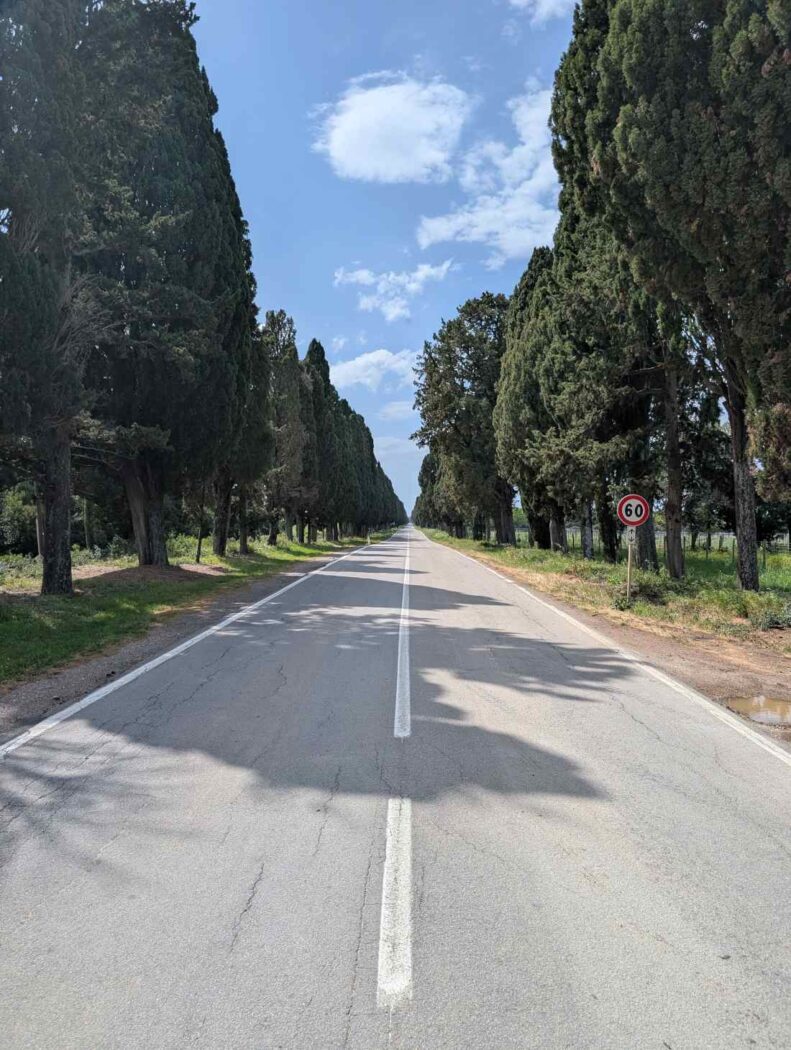
I’d be remiss if I did not mention the road leading to the village of Bolgheri, one of the most beautiful strips of road in the world. Lined with cypress trees for more than three kilometers, it is awe-inspiring, providing a stop-the-car moment. A stand-in-the-middle-of-the-road-to-take-a-picture moment. A drive-the-car-while-I-hang-the-most-expensive-thing-I-own-out-the-window-to-film-it moment.
And yet the wines being made in this land parallel that awe-inspiring moment; not for the eye, but for the palate. A revelation for those willing to try the experience. My girlfriend, and travelling companion, an Italian living in Italy, said to me, “I did not expect to find this here.” Not an uncommon sentiment, I feel.
Bolgheri has a worldwide reputation for making wines — arguably some of the most famous in Italy —yet they can still impress those who have a preconceived notion of what to expect. I can tell you this: they are much more than you expect.
To experience them to their fullest, it’s best to visit: to feel the love of the land and the dedication shown by their producers in the little piece of heaven that Bolgheri truly is. Many will think, “Been there, tried that” … yes, these are tried and true international grape varieties. But they are made in the most elegant and elevated Italian way possible – what Italy has done for coffee, Bolgheri has done for Cabernet. And we can all thank Sassicaia for that.